Sharing a Kitchen When Someone at Home Has Celiac – What to Separate, What to Clean, and How to Do Shabbat
You don’t need to renovate the kitchen or put the whole family on a gluten-free diet. You need a few smart decisions about what to keep separate, what to clean well and how to handle Shabbat – and we’ve gathered them here.
03.11.2026 · 7 min read
Why home is the place most worth getting right
When someone in the family is diagnosed with celiac, most of the attention goes to restaurants and labels. But most meals are eaten at home, and that’s also where most of the small, quiet exposures happen: a bread crumb left on the board, a knife that went back into the spread after touching a slice, or a colander that only got a quick rinse after regular pasta.
The good news is that you don’t have to make the whole house gluten-free, and you don’t need two of everything. Gluten isn’t a germ that multiplies – it’s a protein in food residue, and food residue can be removed. Celiac organizations note that regular dish soap or a dishwasher removes gluten, so shared plates, cutlery and glasses are usually fine as long as they’re genuinely clean.
This guide is meant to help you spot the places where cleaning alone isn’t enough, and to build a routine everyone at home can stick to. Keep in mind that research in this area is still limited, and some common recommendations are based on experience and caution rather than measurements. It’s worth going over your plan with the dietitian who works with you.
What to keep separate – and what just needs a good wash
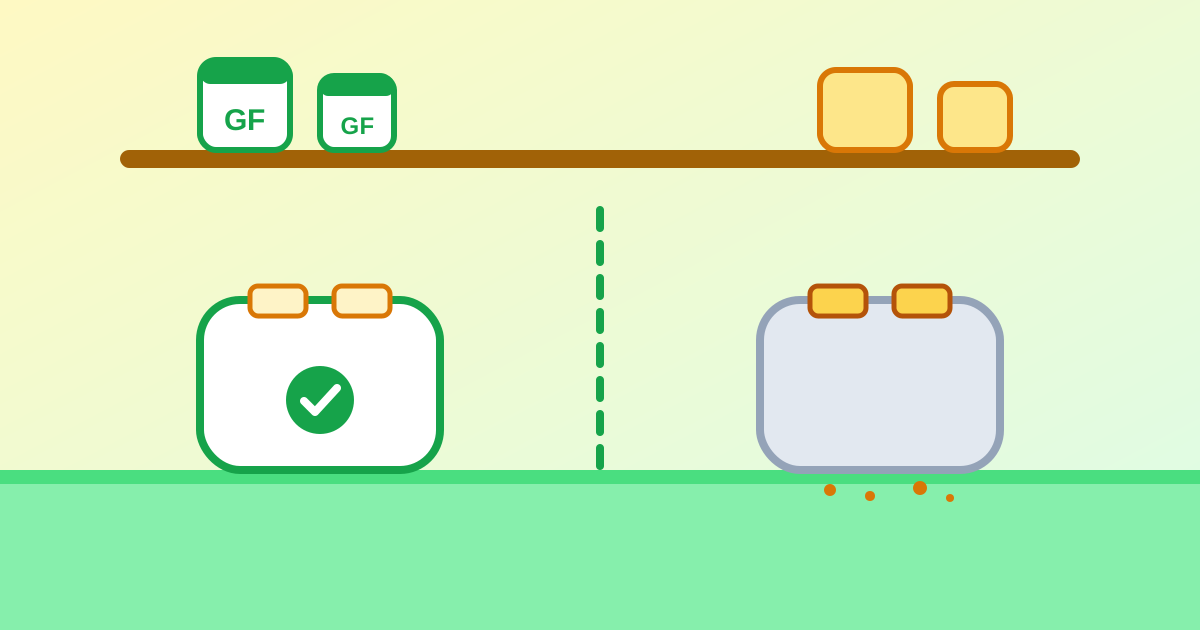
The guiding rule is simple: anything you can wash completely with hot soapy water can be shared. Anything that’s hard to clean thoroughly, or that food touches again and again without cleaning in between, is better kept separate. In practice, these are the items that come up most:
- Toaster: crumbs build up inside and can’t really be cleaned out. A Dutch study of household appliances found that with regular cleaning the toaster risk was relatively low, but the researchers still recommended a separate toaster as a precaution. A middle ground: toaster bags for gluten-free slices.
- Butter, spreads, jam, chocolate spread and tubs of hummus: every dip of a knife that touched regular bread leaves crumbs in the jar. Buy a separate jar and label it, or agree on a family rule of a clean spoon every time. Squeeze bottles make the problem almost disappear.
- Wooden cutting boards: wood scratches and cracks, and dough and crumbs get stuck in the grooves. Keep a dedicated board for gluten-free bread. In the same study, a plastic board rinsed only with water, no soap, carried the highest risk, while a glass board run through the dishwasher carried the lowest.
- Colanders and sieves: the fine mesh traps bits of pasta and dough and is very hard to clean completely. This is one of the items most worth buying separately and labelling.
- Cast iron (like a shakshuka pan) and scratched non-stick pans: seasoned cast iron isn’t scrubbed hard and its coating holds on to residue; scratches in non-stick catch food. Many professionals recommend dedicating such a pan to gluten-free cooking only, or cooking in stainless steel or a pan with an intact coating.
- Frying oil and deep fryers: if you fried breaded schnitzel, that oil is no longer suitable for gluten-free fries. Use fresh oil, and in an air fryer, wash the basket with hot soapy water between uses.
💡 To avoid mix-ups, pick one color for every gluten-free item – a red handle, a yellow sticker or a bit of colored tape – so the whole family recognizes them at a glance.
Storage, labelling and cleaning: a routine that works
In the pantry and fridge, the most useful rule is “gluten-free on top”. When gluten-free products sit on the top shelf, crumbs and flour from regular products can’t fall onto them. Sealed containers and a separate freezer shelf help a lot too, especially for challah, pita and baked goods.
Labelling is half the job. A simple “gluten-free” sticker or a consistent color on containers, jars and utensils saves questions and, above all, prevents mistakes when someone else is cooking – a partner, a grandparent or a kid making their own sandwich.
As for cleaning, you don’t need special products. Hot water, dish soap and a good scrub, or a dishwasher, remove gluten from surfaces and utensils. According to Coeliac UK, separate sponges or cloths aren’t necessary, but make sure no food residue is left on them. Wipe the counter before preparing gluten-free food, and wash your hands after handling bread or dough.
- Make the gluten-free food first, and the regular dish afterwards
- One spoon per pot – no “taste and put it back” between pots
- Regular flour drifts through the air and settles on surfaces, so on a wheat-baking day, close and cover whatever you don’t need
- If you share an oven, cover the gluten-free dish or bake it in its own tray on the top rack
Family meals everyone can eat
The simplest way to lower the risk is to make as many meals as possible gluten-free from the start. Israeli home cooking makes this fairly easy: rice, potatoes, legumes, vegetables, eggs, chicken and fish are naturally gluten-free. Shakshuka, rice with lentils, roast chicken with vegetables, Israeli salad and tahini – nobody will feel anything is missing.
When a meal comes with a gluten side like pasta or ptitim (Israeli pearl couscous), cook the base gluten-free and serve the regular carb on the side, in its own pot. And with anything processed – sauces, soup powders, spice blends – check the label. Our separate guide to hidden gluten covers where it tends to turn up.
Just as important: don’t turn the family member with celiac into a “problem” everyone has to work around. When most of the table is shared and safe, the meal still feels like a family meal.
Kids, snacks and siblings
When a child with celiac lives with siblings who eat gluten, snacks are usually the flashpoint. Set aside a drawer or box of gluten-free snacks the child can help themselves to without asking every time. It builds independence and avoids the moment they open a sibling’s bag.
Teach all the kids a few simple house rules: no swapping snacks, no dipping into the labelled spread, and crackers and cookies are eaten at the table, not on the couch. Homemade play dough and flour-based modelling clay belong on the list too, because little kids put their hands in their mouths.
And here too – not every innocent-looking snack is gluten-free. Recipes change, so check the packaging even on products you’ve been buying for years. For celiac at kindergarten and school, see our separate guide.
💡 Let your child pick a few regular favorites for their drawer. When what they love is within reach, it’s much easier to skip what they can’t have.
Shabbat, holidays and guests
Friday night dinner may be the biggest test of a shared kitchen. The gluten-free challah gets its own board, its own knife and its own cover, and it’s best placed at the other end of the table – away from the regular challah and the crumbs that fly during cutting. Think about the salt as well: if the regular challah is dipped into a shared salt bowl, set out a separate little bowl for the gluten-free one.
Wine and kiddush usually aren’t an issue, since grape wine is gluten-free. What does need attention is the chamin (slow-cooked Shabbat stew): pearl barley, kishke and flour-based kugel are all gluten. You can swap the barley for rice, potatoes or buckwheat labelled “gluten-free”, and make the kishke gluten-free or cook it in a separate pot. For halachic questions, such as the blessing over gluten-free challah, it’s worth asking a rabbi.
When guests come over – or when you’re the guests – a short, clear explanation in advance goes a long way. Tell your hosts that even one crumb matters, offer to bring a dish or two, and ask for the gluten-free dishes to be set aside with their own serving spoon. At home, if a guest brings a cake or pastries, put them on a separate tray, not on the counter where you prepare gluten-free food.
- A separate board, knife and cover for the gluten-free challah
- A separate salt bowl if you dip the challah
- Serve and plate the gluten-free food first, before the spoons get mixed up
- At Passover, remember that regular matzah and matzah meal are wheat
FAQ
Does the whole family have to eat gluten-free?
No. Many families run a shared kitchen successfully by separating a few utensils and products, cleaning well and keeping a consistent routine. Some families prefer a fully gluten-free home, especially with a young child – that’s a personal decision, best made together with your dietitian.
Do we need separate plates, cutlery and sponges?
Usually not. Dish soap and hot water or a dishwasher remove gluten, so smooth utensils that have been washed properly can be shared. Separation matters for things that are hard to clean thoroughly, like the toaster, colander, wooden board and scratched pans.
Can we share the oven and the air fryer?
Yes, with care. In the oven, cover the gluten-free dish or use a separate tray. In the air fryer, wash the basket with hot soapy water before cooking gluten-free food. Check with your dietitian what works for you.
What do we do when grandma or friends want to cook for us?
Explain briefly ahead of time what matters – not just the ingredients but also the utensils and surfaces – and offer to send a list of products or bring some of the dishes. Most hosts are glad to get clear guidance instead of guessing.
Sources
- Coeliac UK – Cooking at homeSimple steps for cooking at home: hot soapy water or a dishwasher, separate spreads, a separate bread board and toaster bags.
- Coeliac UK – Cross contamination at homeWhat cross-contamination at home means and how to keep gluten-free food clean during storage and preparation.
- Celiac Canada – Gluten Cross-Contamination in the Kitchen: What’s the risk?A review of a Dutch study on household cutting boards, toasters and fryers, and which cleaning methods reduce gluten.
- NIDDK – Eating, Diet, & Nutrition for Celiac DiseaseThe US National Institutes of Health on the gluten-free diet and the value of working with a dietitian.
- Coeliac UK – Support for parents and carersInformation and support for parents and carers of children with coeliac disease.
General information only – not medical advice. For personal questions, talk to your doctor or a dietitian.
Looking for somewhere to eat?
Every gluten-free place in Israel, with clear badges and ratings.
Find a place →More on the blog
 Celiac disease – what it actually is, how it’s diagnosed, and how it differs from gluten sensitivity and wheat allergy
 How to eat out safely with celiac – the questions worth asking at a restaurant
 Where does gluten hide? The Israeli guide to foods, ingredients and labels
 A child with celiac at kindergarten, school and beyond – a parent’s guide to birthdays, trips, camps and youth groups
 Gluten-Free Flours and Home Baking – A Practical Beginner’s Guide
 Just Diagnosed with Celiac? A Guide to the First Few Weeks
 Traveling abroad with celiac – a guide to flights, hotels, supermarkets and local-language celiac cards
 Celiac and the Jewish holidays – a gluten-free guide from Rosh Hashanah to Shavuot